

Immune Support Research
Thymosin alpha-1 research material for T-cell maturation, innate immune signalling and inflammation resolution.
1 product.
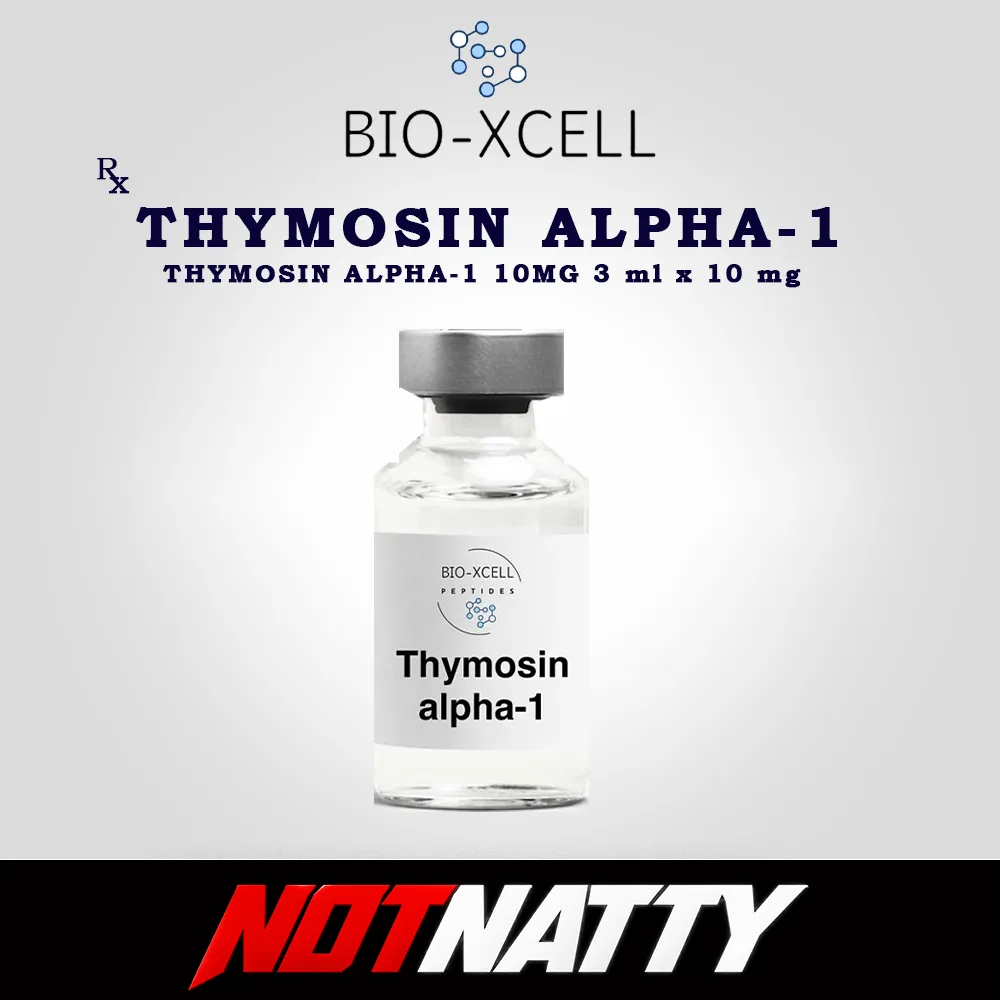
Immune Support Research Peptides
Immune research distinguishes between activating innate immunity, maturing adaptive immunity, and resolving inflammation. Thymosin alpha-1 is unusual because it touches all three: it is studied for T-cell maturation, dendritic-cell function, natural-killer-cell activity, and cytokine balance. That breadth makes it a useful tool, but it also means the readout has to match the question.
What the research covers
Thymosin alpha-1 is a 28-amino-acid peptide originally isolated from thymus tissue. It is studied as an immune modulator that promotes T-cell maturation and dendritic-cell function, enhances natural-killer-cell activity, and shifts cytokine responses toward a balanced Th1/Th2 profile. It also activates Toll-like receptor signalling in innate immune cells, which links it to antiviral and anti-inflammatory effects.
Clinical research has examined thymosin alpha-1 in chronic hepatitis B and C, sepsis-related immune suppression, and vaccine-response settings. Those studies are context-specific and should not be generalised to healthy users or to other immune challenges.
Study design should distinguish innate from adaptive readouts. Innate activation can be measured with interferon-alpha, TNF, IL-6, and TLR-pathway reporters; adaptive maturation is better captured with T-cell subsets, dendritic-cell markers, and antigen-specific proliferation. In sepsis models, timing matters because an immunomodulator given before or after the inflammatory insult can produce opposite results. Vaccine-response studies should measure antibody titres and T-cell responses rather than cytokines alone. Include vehicle and untreated controls, and report the immune challenge, route, and sampling interval.
How to choose
If the endpoint is T-cell maturation or dendritic-cell activation, thymosin alpha-1 is the direct tool. If the endpoint is innate antiviral signalling, measure interferon and TLR-pathway activation alongside it. If the endpoint is inflammation resolution, measure both pro- and anti-inflammatory cytokines, because an immunomodulator can move either direction depending on context.
Documentation and handling
Thymosin alpha-1 is a peptide and follows standard lyophilised storage at -20C. Because it is immunomodulatory rather than immunosuppressive, studies should include both pro- and anti-inflammatory readouts and should report the timing relative to immune challenge.
FAQ
Is thymosin alpha-1 an immune stimulant? It is better described as an immune modulator. The effect depends on the model and the timing.
Is it approved for hepatitis? It has been studied in hepatitis, but approval status varies by country. It is not approved for general immune support.
Can it be combined with other peptides? Combination studies exist, but the immune readouts should be designed to detect additive, synergistic, or opposing effects.
Buying Immune Support Research Online
Thymosin alpha-1 research material for T-cell maturation, innate immune signalling, vaccine response, and inflammation resolution. Research-grade vial.