


TB-500
Thymosin beta-4 fragment studied for systemic recovery and cell migration - how it differs from BPC-157 and how to handle it.
2 products.
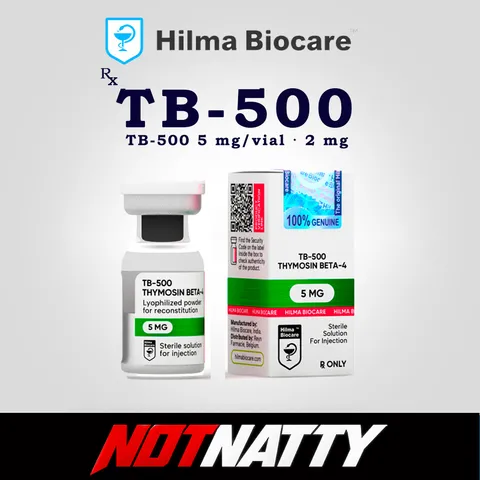
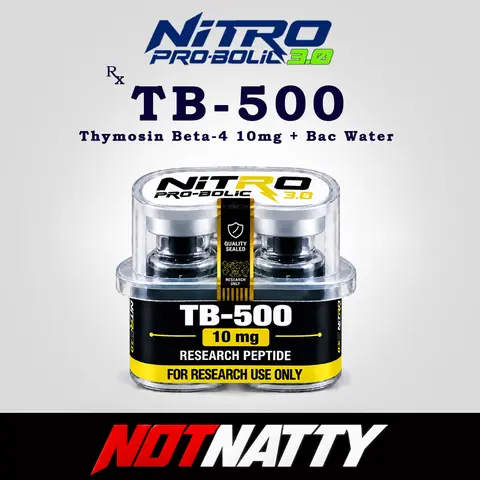
TB-500: Systemic Recovery, Explained
TB-500 is a synthetic fragment of thymosin beta-4, a protein involved in actin regulation and cell migration. Where BPC-157 is studied locally, TB-500 is studied systemically: it is the peptide people reach for when wear is widespread rather than concentrated in one joint.
Actin and Cell Migration
Thymosin beta-4's core function is to bind actin, the protein that forms the cell's internal skeleton. Actin dynamics control how cells move, change shape and divide.
That matters for healing because repair is a migration problem before it is a building problem. Cells have to travel to the injury site before they can lay down new tissue, and actin regulation is part of how that travel is coordinated. TB-500 is studied as a fragment that retains this activity.
What the Research Suggests
Preclinical work has reported improved wound healing, reduced inflammation and better outcomes in models of soft-tissue injury. Cardiovascular and dermal repair models have also been studied.
The pattern is consistent with a systemic effect: faster cell migration, more organised repair, less scarring. What is missing, as with most peptides in this category, is large-scale controlled human data.
How It Differs From BPC-157
BPC-157 is local and gut-focused. TB-500 is systemic and connective-tissue focused. That is the practical distinction, and it is why the two are often stacked.
BPC-157 has more gastrointestinal evidence; TB-500 has more evidence in dermal and systemic repair models. Neither is a substitute for the other, and a blend is simply a fixed combination of the two.
Reconstitution and Storage
TB-500 ships lyophilised, typically in 5 mg or 10 mg vials. Reconstitute with bacteriostatic water down the vial wall, swirl gently and avoid shaking. Store the reconstituted solution at 2-8°C, away from light.
The peptide is fragile once in solution. Repeated freeze-thaw cycles are worse than steady refrigeration, so aliquot if a vial will be used over a long period.
Practical Expectations
The floor for noticing anything is around two weeks. Structural change takes longer, and the literature does not support instant results. Anyone describing TB-500 as a same-week fix is describing something other than the research.
It is not androgenic, so there is no suppression and no recovery protocol. That makes it usable alongside other work without adding a hormonal variable.
Where It Fits With BPC-157
The two are frequently stacked because their targets do not overlap. BPC-157 is studied for the local injury environment and gut lining; TB-500 is studied for the systemic movement of repair cells. Running both means covering the site of damage and the body's capacity to reach it.
If only one is used, the choice should follow the pattern of the problem. A single painful tendon with no other symptoms points local; generalised stiffness, multiple niggles and slow recovery after sessions points systemic.
What This Page Offers
Listings state vial size, purity documentation and live stock. This page covers mechanism, evidence and handling; the product page carries the full specification and buying details.
Buying TB-500 Online
TB-500 research overview: a thymosin beta-4 fragment studied for systemic recovery, cell migration and soft-tissue repair, with handling guidance.