The bodybuilding bubble gut isn't caused by carbs or steroids. It's insulin and HGH abuse destroying your midsection. Here's the ugly truth—and how to avoid it.
There was a time when bodybuilders looked like Greek gods. Frank Zane. Serge Nubret. Bob Paris. Men with tiny waists, wide shoulders, and midsections you could bounce a quarter off. They looked healthy. They looked aesthetic. They looked human.
Then something changed.
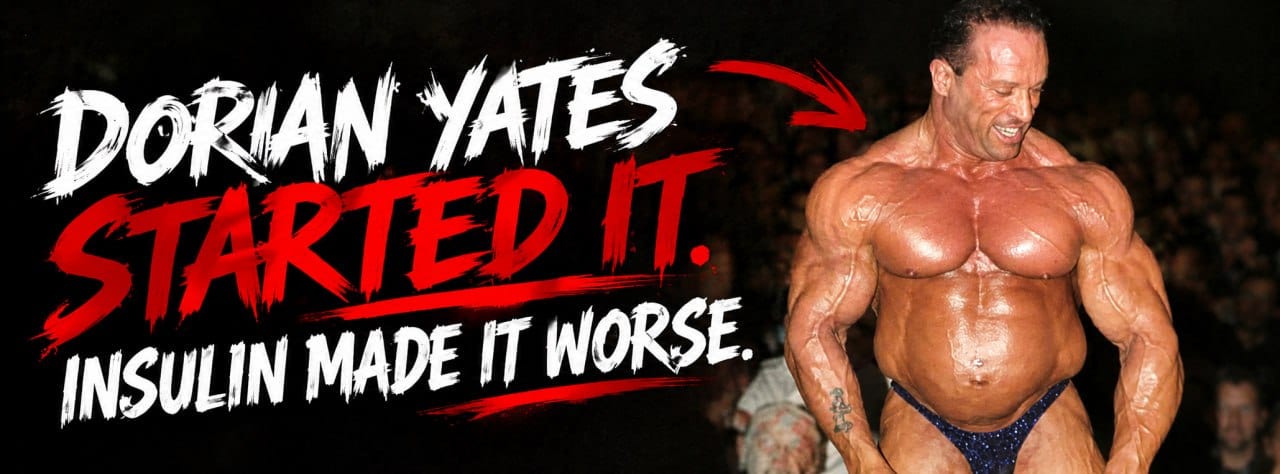
Sometime in the 1990s, the physiques on the Olympia stage started to morph. Waists thickened. Stomachs protruded. Abs that used to be flat and tight now looked like they were being pushed outward from the inside. The "bubble gut" was born—and it's been ruining the sport's aesthetics ever since.
Ask the average gym bro what causes it, and you'll get the same lazy answer: "It's all the food they eat, man. Too many carbs."
Wrong. Dead wrong.
The bubble gut isn't a food baby. It's not bloating from rice and sweet potatoes. It's something far more sinister: the long-term abuse of insulin combined with human growth hormone (HGH) . And if you don't understand how these drugs interact, you're one bad cycle away from looking pregnant on stage.
Let's pull no punches and talk about what's really happening to the midsections of modern bodybuilders.
The Real Cause: It's Not the Carbs, Stupid
Let's get one thing straight: eating a lot of food does not give you a bubble gut. If that were true, every competitive eater would look like a bodybuilder with a distended stomach. They don't. They just look fat.
The bubble gut is visceral fat and organ growth —specifically, the accumulation of fat inside the abdominal cavity, surrounding your organs, and the actual enlargement of those organs themselves. This isn't subcutaneous fat (the jiggly stuff under your skin). This is deep, hard, structural expansion.
What causes this?
Two drugs working in tandem:
1. Insulin: The Storage Hormone on Steroids
Insulin is the most anabolic hormone in the human body. It shuttles nutrients into cells, promotes glycogen storage, and drives protein synthesis. Bodybuilders figured out decades ago that if you inject insulin at precise times around training, you can force-feed your muscles with nutrients and grow at an accelerated rate.
But here's the problem: insulin doesn't discriminate. It stores nutrients everywhere—including your visceral fat cells. And when you're using high doses of insulin chronically, you develop insulin resistance. Your body needs more and more insulin to get the same effect. The excess insulin drives fat storage specifically into the abdominal cavity, around the organs.
Result: A thick, distended waist that no amount of cardio can fix.
2. HGH: The Organ Grower
Human growth hormone is amazing for fat loss, recovery, and overall anti-aging. But when abused at high doses for years, it does something else: it grows everything—including your internal organs.
HGH causes something called acromegaly in extreme cases. Your jaw grows. Your hands grow. Your forehead thickens. And yes, your intestines, liver, and kidneys grow too. Combined with visceral fat from insulin abuse, you get the classic bubble gut: organs pushing outward against a weakened abdominal wall.
Result: A stomach that protrudes even when you're at 4% body fat.
What Does NOT Cause the Bubble Gut (Stop Blaming These)
Steroids Alone
Here's the uncomfortable truth that many old-school guys don't want to admit: anabolic steroids do not cause the bubble gut. Arnold and his contemporaries used massive amounts of testosterone, Deca, and Dianabol in the 70s. None of them had bubble guts. Frank Zane had a 28-inch waist on stage. Lee Haney had a tight, controlled midsection throughout his entire reign.
The difference? They didn't have insulin and pharma-grade HGH. Those drugs changed the game—and not for the better aesthetically.
Eating Too Many Carbs
Carbs bloat you temporarily. Water retention from glycogen can make you look soft and puffy. But that goes away when you drop carbs or take a diuretic. The bubble gut doesn't go away. It's structural. It's organ growth and visceral fat. You can't "cut water" your way out of it.
Age
Some people claim the bubble gut is just "getting older." Bull. Dorian Yates had a thick waist in his early 30s. Ronnie Coleman had visible abdominal distention by his early 30s too. Age doesn't grow your intestines. Drugs do.
The History Lesson: Dorian Yates Started This
Let's give credit where credit is due—or blame, depending on how you look at it.
Dorian Yates was the first Mr. Olympia to bring the "mass monster" look to the mainstream. He was bigger, thicker, and denser than anyone who came before him. But with that size came a thicker waist. Dorian's midsection wasn't as extreme as what we see today, but it was noticeably different from the vacuum poses of the 70s and 80s.
Why? Because Dorian was one of the first bodybuilders to openly experiment with insulin and pharmaceutical HGH. He's talked about it in interviews. He was the prototype for the modern mass monster—huge everywhere, including the gut.
Since Dorian, the trend has only accelerated. Ronnie Coleman, Jay Cutler, Phil Heath, Big Ramy—each era brought more size, but also more distension. The classic aesthetic has been replaced by a freak show of organ growth and insulin-induced visceral fat.
And the fans have noticed. Attendance at bodybuilding shows has declined. The general public recoils at the sight of these physiques. Even hardcore fans admit the sport has lost its visual appeal.
The Genetic Reality: If You Have Bad Genetics, These Drugs Will Make You Look Worse
Here's the part that nobody in the gym wants to hear: your genetics determine how you respond to insulin and HGH. Some guys can abuse these drugs and maintain a relatively tight waist. Others take a moderate dose and blow up like a tick.
Let's look at some examples.
Dave Palumbo
Dave Palumbo is a smart guy. He's a writer, a coach, and a former competitive bodybuilder. But look at his midsection during his competitive days—or even now. The man has a classic bubble gut. Despite being lean, his stomach protrudes significantly. Palumbo has been open about his insulin and HGH use over the years. The result? A distended waist that no amount of dieting can fix.
Mike Israetel
Mike Israetel is a PhD in sport physiology and a competitive bodybuilder. He's also open about his PED use—including insulin and HGH. And if you look at his physique, you'll notice a certain softness around the midsection despite being muscular. The visceral fat is there. The organ growth is there. It's not genetics—it's the drugs doing what they do.
Big Lenny
Leonard "Big Lenny" Persin is a cult figure in the bodybuilding world. He's known for his extreme physique and his even more extreme insulin abuse. Big Lenny has openly discussed using massive doses of insulin and HGH. The result? A gut that looks like he swallowed a watermelon. It's not fat. It's organ growth and visceral fat. And it's permanent.
The pattern here? These guys all have one thing in common: they used insulin and HGH heavily, and their genetics did not protect them from the consequences. They ended up looking worse, not better.
Now, I'm not here to make sweeping claims about ethnic genetics. But it's worth noting that the worst cases of bubble gut often appear in athletes with certain genetic backgrounds. Insulin sensitivity varies widely among individuals and ethnic groups. Some people are more prone to visceral fat storage. Some people's organs respond more aggressively to HGH. If you're in that category, insulin and HGH will destroy your midsection faster than someone else.
The lesson? If your genetics aren't elite—if you're not a top-tier professional with superior insulin sensitivity and organ resilience—these drugs will make you look worse, not better. You'll end up with a thick waist, a protruding gut, and a physique that looks more like a science experiment than a Greek statue.
The Mechanism: How Insulin + HGH Creates the Bubble Gut
Let's break down the physiology because understanding why this happens is the first step to avoiding it.
Step 1: Insulin Abuse → Visceral Fat Accumulation
When you inject insulin, you're essentially overriding your body's natural nutrient storage system. Insulin shuttles glucose and amino acids into cells. But if you're not in a caloric deficit—if you're eating to grow—that insulin is also storing fat. And the fat it stores first is visceral fat—the fat around your organs.
Visceral fat is different from subcutaneous fat. It's metabolically active. It releases inflammatory cytokines. It contributes to insulin resistance. And it expands your abdominal cavity from the inside, pushing your abdominal wall outward.
Step 2: HGH Abuse → Organ Growth
HGH stimulates the production of insulin-like growth factor 1 (IGF-1). IGF-1 tells cells to grow. That includes muscle cells—but also organ cells. Chronic HGH abuse causes organomegaly—enlargement of the liver, kidneys, intestines, and heart.
Your abdominal cavity has a fixed volume. When your organs grow, they need somewhere to go. So they push outward, stretching your abdominal wall and creating that classic "bubble" look.
Step 3: The Synergy Effect
Insulin and HGH work synergistically. Insulin increases IGF-1 receptors. HGH increases insulin resistance. Together, they create a feedback loop that accelerates visceral fat storage and organ growth. The result is a thick, distended midsection that no amount of ab training can fix.
The Guide: How NOT to Abuse Insulin and HGH
If you're going to use these drugs—and I'm not endorsing it—at least don't destroy yourself in the process. Here's how to minimize the damage:
1. Use Insulin Sparingly and Strategically
- Dose: If you're going to use insulin, use the minimum effective dose. That's typically 2–4 IU post-workout for most people, not the 10–20 IU some idiots recommend.
- Timing: Use insulin only around training when your muscles are primed to absorb nutrients. Never use it before bed.
- Duration: Don't stay on insulin year-round. Cycle it. Four to six weeks on, then off for at least the same amount of time.
- Monitor: Check your fasting blood glucose regularly. If it's creeping up, you're becoming insulin resistant. Stop.
2. HGH: Less is More
- Dose: For fat loss and recovery, 2–4 IU per day is plenty. The guys using 10+ IU are the ones with the bubble guts.
- Duration: HGH takes months to show effects, but that doesn't mean you should stay on it forever. Cycle it. Six months on, then off.
- Monitor: Watch your waist circumference. If it's growing while you're staying lean, your organs are growing. Back off.
3. Get Blood Work
If you're using insulin or HGH, you need regular blood work. Check:
- Fasting glucose
- HbA1c (long-term blood sugar)
- IGF-1 levels
- Liver and kidney function
- Lipid panel
If any of these are out of range, stop. The damage is cumulative and often irreversible.
4. Don't Chase the Freak Look
The mass monster era is dying. The classic physique is making a comeback. Guys like Chris Bumstead have proven you can be huge, aesthetic, and successful without destroying your midsection. Aim for the V-taper, not the barrel.
The Bottom Line: The Bubble Gut is a Choice
The bubble gut isn't a badge of honor. It's a deformity caused by drug abuse. It's what happens when the pursuit of size overrides common sense, health, and aesthetics.
And here's the hard truth: If you're not a genetic elite—if you don't have superior insulin sensitivity and a resilient organ structure—these drugs will make you look worse, not better. You'll trade a tight waist for a protruding gut. You'll trade health for a look that even the general public finds repulsive.
The fix is simple: stop abusing insulin and HGH. Use them sparingly if at all. Focus on building a balanced, aesthetic physique that stands the test of time.
Or keep chasing the freak look and end up like Big Lenny—a cautionary tale in a stringer tank top.
Your choice.