


Hair Loss & Restoration
Hair loss research compounds compared - GHK-Cu copper peptides, finasteride and hair growth peptides, with mechanism, delivery and vial sizes.
4 products.
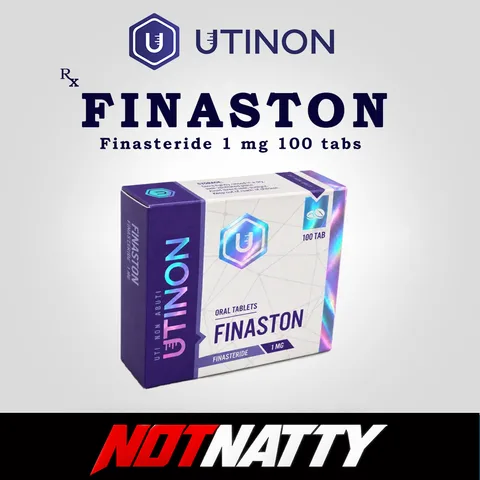
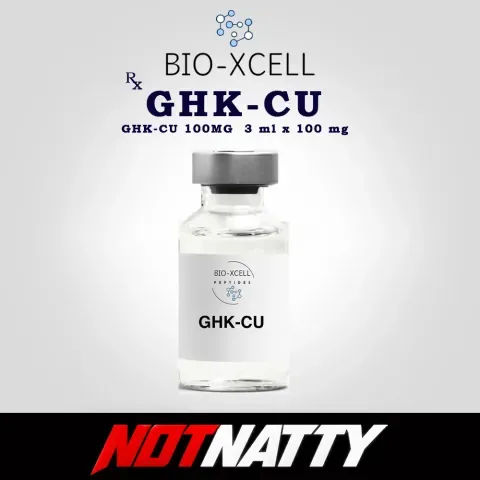
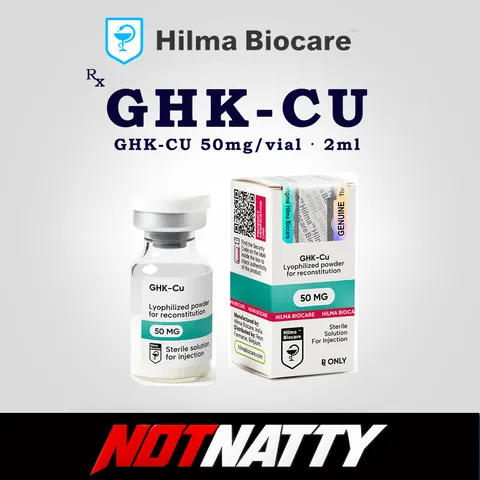
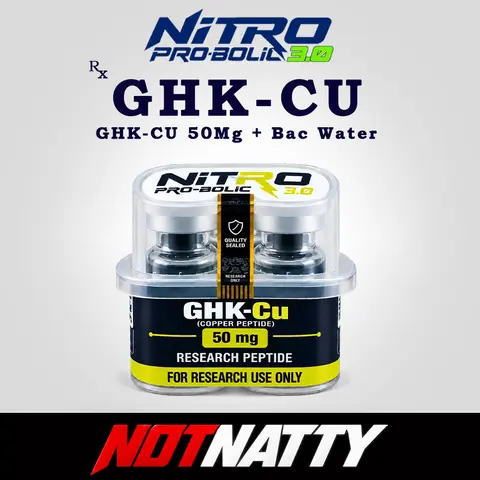
Hair Loss & Restoration: Peptides, Copper and the Androgen Pathway
Hair loss research is not one field. Androgenetic alopecia, telogen effluvium, alopecia areata and the scarring alopecias involve different cell populations, different immune signalling and different timelines. Grouping every hair product together hides that. This category collects the compounds sold at NotNatty that are studied in hair biology - copper peptides such as GHK-Cu, the 5-alpha reductase inhibitor finasteride, and peptide research materials discussed in the context of the follicle - so they can be compared by mechanism rather than by marketing claim.
Everything here is supplied for laboratory research only. Nothing in this category is a treatment, a cure or a substitute for medical care, and nothing on this page is medical advice. Hair loss has many causes, some of which need a clinician rather than a research compound.
Peptides for Hair Loss: What This Category Actually Contains
The search phrase peptides for hair loss covers several different research approaches, and they are not interchangeable. The first is the androgen pathway: finasteride inhibits type II 5-alpha reductase, the enzyme that converts testosterone to dihydrotestosterone, the androgen most associated with follicular miniaturisation in androgenetic alopecia. The second is the follicle microenvironment: copper peptides and other hair loss research compounds are studied for collagen, elastin, angiogenesis and the signalling environment around the follicle rather than for hormone suppression. The third is delivery - whether a compound is applied to the scalp or studied systemically - which changes what reaches the follicle at all.
That three-way split is why this category exists under Face & Hair Compounds. It keeps the androgen route, the peptide route and the delivery question visible instead of flattening them into a single "hair growth" promise.
If you are working through the peptide side specifically, the GHK-Cu category covers the copper peptide in more detail, and the finasteride listing can be found on its product page.
Peptides for Hair Growth and Peptides That Stimulate Hair Follicles
Peptides for hair growth is a broader and looser phrase than most of the marketing around it suggests. In the research literature, hair growth peptides are usually studied for one of three things: supporting the extracellular matrix around the follicle, influencing blood supply to the dermal papilla, or modulating inflammatory signalling in the scalp. None of those mechanisms is the same as directly switching a follicle from resting to growing.
The phrase peptides that stimulate hair follicles is therefore best read as shorthand. A peptide may create conditions that are more favourable in a research model without being a follicle stimulant in any strict sense. The gap between a plausible mechanism and a measured hair outcome is where most claims in this market become unreliable, and this page does not pretend that gap has been closed.
GHK-Cu for Hair Loss: Copper Peptides for Hair
GHK-Cu for hair loss is the most-searched copper peptide question. GHK-Cu is a naturally occurring copper-binding tripeptide - glycine, histidine and lysine - that carries copper into enzymatic reactions involved in collagen synthesis, elastin production and tissue remodelling. In hair research, the interest is the follicular environment: the extracellular matrix, the blood supply feeding the dermal papilla, and the inflammatory tone of the scalp.
As copper peptides for hair go, GHK-Cu is the reference compound. The copper tripeptide hair literature is mechanistic and mostly early-stage, which is exactly why the wording here stays cautious. GHK-Cu hair research does not establish regrowth, and GHK-Cu for hair growth should be treated as a research question rather than a result. The same peptide is also studied for skin, wound repair and collagen density, so its hair relevance is one part of a much wider picture.
GHK-Cu Topical for Hair Loss and the Vehicle Problem
GHK-Cu topical for hair loss raises a formulation question that the raw peptide does not answer. A copper peptide has to survive contact with the vehicle, the pH of the scalp and oxygen before it reaches the follicle. Copper complexes are sensitive to oxidation and light, and an unstable formulation can look identical on a label while delivering very little intact peptide.
That is the context for the question of the best copper peptide for hair growth. There is no single answer that holds across every study, because "best" depends on identity and purity, the copper counter-ion, the concentration actually used, the vehicle, and how the material was stored. A cheaper vial with poor stability is not equivalent to a well-handled one. Compare the specification and the handling, not the adjective on the front of the box.
Topical Peptides for Hair Loss vs Injectable Peptides for Hair Growth
Topical peptides for hair loss are studied for local exposure with limited systemic circulation. The appeal is obvious: the scalp is accessible, and a topical route avoids a needle. The limitation is equally obvious: the stratum corneum is a barrier, so penetration is a formulation problem rather than a property of the peptide alone.
Injectable peptides for hair growth are discussed in research in two different senses. Some peptides are studied systemically for effects that might reach the follicle through the circulation; others are studied as local scalp injections. Those are different experiments with different exposure profiles and different risks. Nothing in this category is a recommendation to inject anything, and the research-use-only status of these products is not a formality.
When comparing research peptides for hair loss, separate the route from the molecule. A peptide that performs well in a cell model may never reach the follicle topically, and a peptide that reaches the scalp may still fail to change a hair outcome. Route, formulation and model matter as much as the compound name.
GHK-Cu Dosage for Hair: Why This Page Gives No Dose
GHK-Cu dosage for hair is a real search query, and it deserves a straight answer: NotNatty does not publish or endorse human dosing for any research compound. This shop supplies laboratory materials, not prescriptions, and a number copied from a forum is not a protocol. Published research uses a range of concentrations and delivery systems that are not directly transferable to a vial bought online.
If you are reading the literature, look at the full method - model, vehicle, concentration, frequency and endpoint - rather than extracting a single number. If you are dealing with hair loss as a person rather than a researcher, the appropriate next step is a clinician who can distinguish the causes and discuss approved options. That is not a disclaimer bolted onto the page; it is the honest boundary of what a research supplier can provide.
Hair Loss Peptide Stack: Stacking in Research
A hair loss peptide stack usually means combining compounds that act on different parts of the problem: an androgen-pathway compound, a copper peptide for the matrix and blood supply, and perhaps a growth-hormone secretagogue studied for collagen and skin. In a research setting, a stack is a design choice, not a guarantee of synergy.
The central problem with stacking is confounding. If three compounds change at once, the result cannot be attributed to any one of them, and an adverse effect cannot be traced either. A cleaner experiment changes one variable at a time. The convenience of a blend is real, but it trades away the ability to learn which component did what - the same trade-off described in the Repair & Recovery category for tissue-repair blends.
Peptides for Androgenetic Alopecia and the Finasteride Reference
Peptides for androgenetic alopecia are often discussed as if they compete with finasteride. Mechanistically they sit on different sides of the problem. Finasteride lowers dihydrotestosterone by inhibiting type II 5-alpha reductase; it does not lower testosterone itself, and its tissue effect persists after the drug clears. Copper peptides do not suppress androgen signalling - they are studied for the matrix and the follicular environment.
That makes finasteride the reference point for the androgen route and copper peptides the reference point for the peptide route. They are not interchangeable, and a peptide is not a substitute for a 5-alpha reductase inhibitor in an experiment designed around androgen suppression. The reverse is also true: an androgen inhibitor does not answer a question about extracellular matrix remodelling.
Hair Restoration Peptides and Best Peptides for Hair Growth
Hair restoration peptides is an umbrella term used across the market. Under it sit copper peptides, growth-hormone secretagogues studied for collagen, repair peptides cross-listed from skin research, and blends that combine several of them. The label tells you very little; the specification and the delivery route tell you much more.
For the same reason there is no defensible single answer to best peptides for hair growth. A compound can be the best-studied member of its class and still be a poor fit for a particular experiment. Compare four things: what the compound is studied for, how it is delivered, how stable it is in that delivery system, and whether the batch is documented. A "best" list that ignores those four is a list of adjectives.
Research Chemicals for Hair Loss: Purity, Storage and Handling
Research chemicals for hair loss include both peptides and small molecules, and they do not share a storage profile. Lyophilised peptides generally want cold, dark, dry storage before reconstitution and 2-8°C protected from light afterwards. GHK-Cu is especially light-sensitive, so keep it in its carton and return it to the fridge promptly rather than leaving it on a bench.
Reconstitute gently: run bacteriostatic water down the vial wall, swirl rather than shake, and avoid foaming, which can denature the peptide. Finasteride tablets are a different format entirely and should be kept in their blister until use, away from moisture. Purity documentation matters in every case - a certificate of analysis is the difference between a named compound and an assumption. Batch identity, not the product title, is what a researcher is actually buying.
What to Compare on This Page
The listings below state the compound, strength or vial size, pack format and live stock. Start with the research question - androgen pathway, follicular microenvironment or delivery - then compare the specification against the protocol you are working from. Open a product page for the full description, handling notes and buying details. If a product is out of stock, the listing says so rather than hiding it behind a pre-order.
For related reading, the Growth Hormone & Secretagogues cross-list covers the skin, hair and collagen angle of the GH peptides, and Face & Hair Compounds is the parent category for the whole department.
Buying Hair Loss & Restoration Online
Research hair loss compounds - GHK-Cu copper peptides, finasteride and hair growth peptides. Compare mechanisms, topical vs injectable research and vial sizes.