
 Original
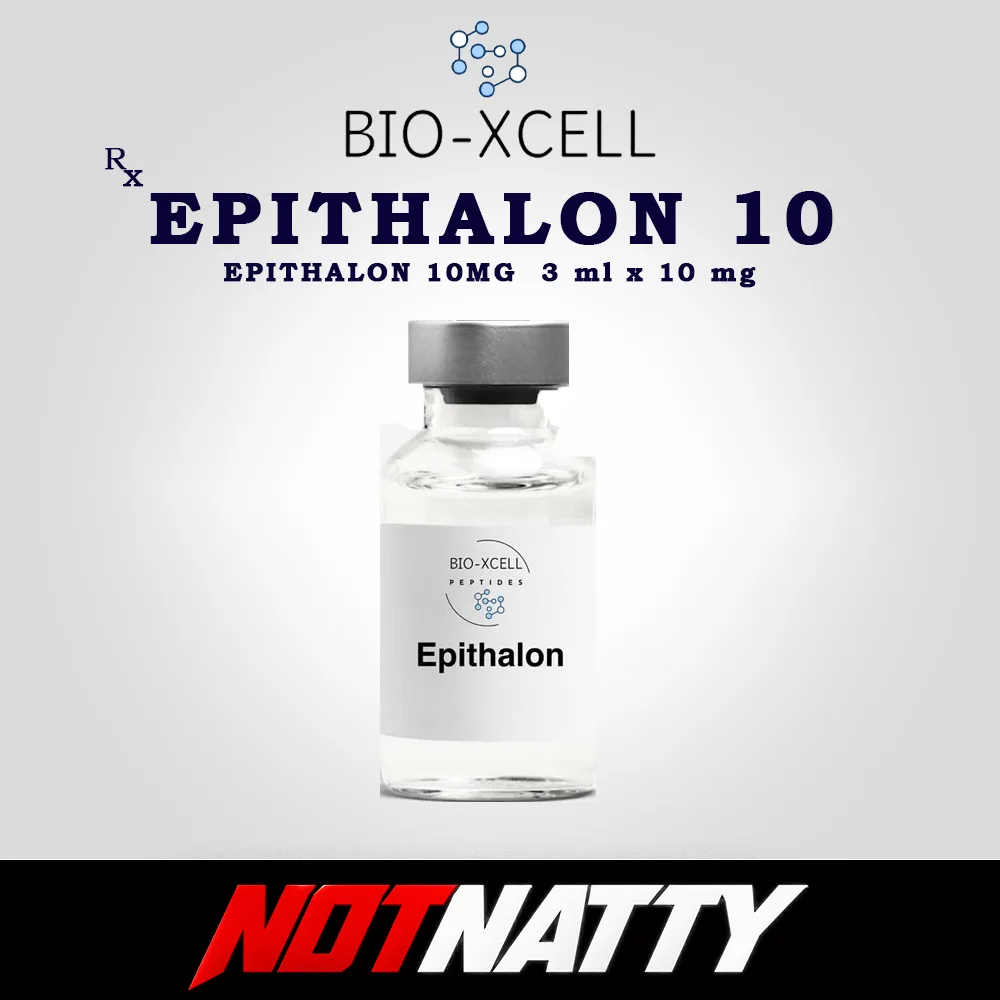
EPITHALON 10MG | Telomerase & Longevity Peptide
Epithalon 10mg is an AEDG tetrapeptide studied for telomerase activation, pineal function and cellular longevity pathways. Research-grade vial.
Product Details
Key specs at a glance
Shipping & Logistics
Bioxcell — USA (Domestic) shipping
 Ships from
USA
Ships to
USA
USPS Priority - arrives within 1 week — $40.00 shipping (USPS Priority)
Secure Shopping
Your data is protected with the highest security standards.Want to buy Wholesale?
Get exclusive discounts on orders over $1,500 — contact us.Description
Epithalon (Epitalon) is a synthetic tetrapeptide with the sequence Ala-Glu-Asp-Gly, developed from research on the pineal gland and ageing. Khavinson and colleagues (Bulletin of Experimental Biology and Medicine, 2003) reported that the peptide induced telomerase catalytic-subunit expression, telomerase activity and telomere elongation in human somatic cells. Related work from the same group examined pineal melatonin regulation and age-related neuroendocrine changes, providing the rationale for cellular-ageing research. Telomerase activation is studied because telomere shortening is associated with replicative senescence, although the relationship between telomerase, longevity and cancer risk remains an active area of investigation.
Researchers use Epithalon to model telomere maintenance, replicative capacity, oxidative stress and neuroendocrine ageing, and to compare peptide-driven telomerase activity with NAD+ and sirtuin pathways. The peptide is supplied as 10mg of research-grade material in a 3ml vial. Store lyophilized powder at -20C, protect it from light, and reconstitute with bacteriostatic water according to institutional protocols. Common research questions concern the magnitude and durability of telomerase induction, whether effects are cell-type specific, and how the peptide compares with small-molecule telomerase activators.
This product is intended strictly for laboratory research by qualified professionals. It is not approved for human consumption, clinical treatment or therapeutic use. A key distinction in the literature is between telomerase induction and measurable telomere elongation; the former can be detected within days, while the latter requires many cell divisions. Studies therefore use different endpoints: TRAP assays for telomerase activity, qPCR for telomere length, senescence-associated beta-galactosidase for replicative ageing, and melatonin measurements for pineal effects. Cell type matters, and fibroblasts, lymphocytes and neuronal cultures have produced different magnitudes of response.
Tags: Peptide, Longevity & Mitochondrial Research, Bioxcell
Customers Also Bought
People Also Bought


Customer Reviews
No reviews yet
Be the first to rate this product and help the community.
Only signed-in members can leave reviews.
Sign In to Review